Integrating Tango.ad with Ecomail
Connect Ecomail to Tango.ad to streamline lead acquisition and start automated nurturing sequences.

Many ecommerce stores rely on coupons to collect email addresses. While this approach often works, it also reduces margins and trains visitors to wait for discounts before making a purchase. A more effective strategy is to identify visitors who are already interested in promotions and convert them into subscribers using relevant content instead of financial incentives.
In this tutorial, we’ll build a simple visitor journey in Tango.ad that:
Identifies visitors interested in promotional products
Assigns a behavioral metafield to those visitors
Shows a personalized follow-up campaign
Collects email addresses without offering a coupon
Presents additional seasonal offers to highly engaged visitors
The entire scenario is built using two connected weblayers.
The scenario consists of three simple stages:
A visitor sees a promotion banner featuring a limited-edition football trophy kit.
When the visitor clicks the banner, Tango.ad records the interaction and assigns a metafield called:
interestedInPromotions
This metafield will be assigned manually when visitors interact with the first campaign.
Using manual assignment provides full control over how visitors enter the journey and prevents unwanted tagging caused by automatic rules.
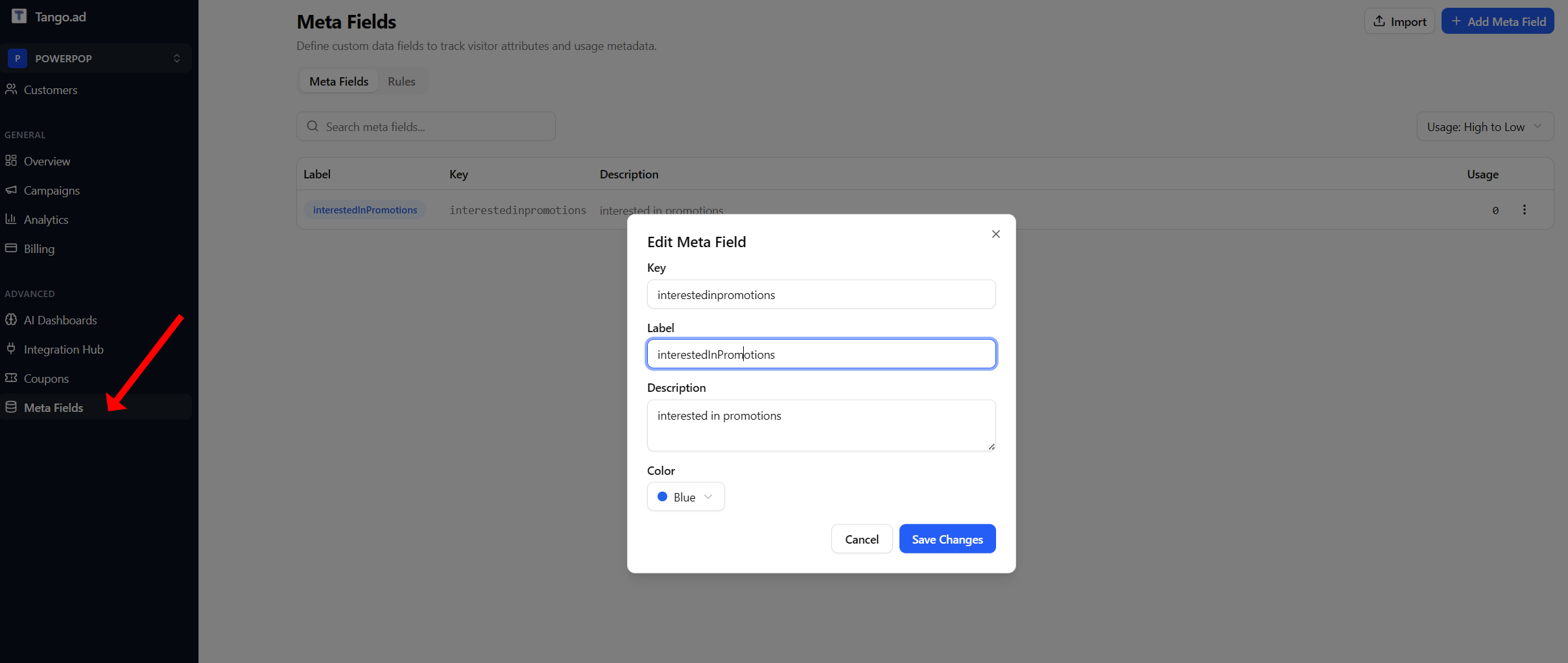
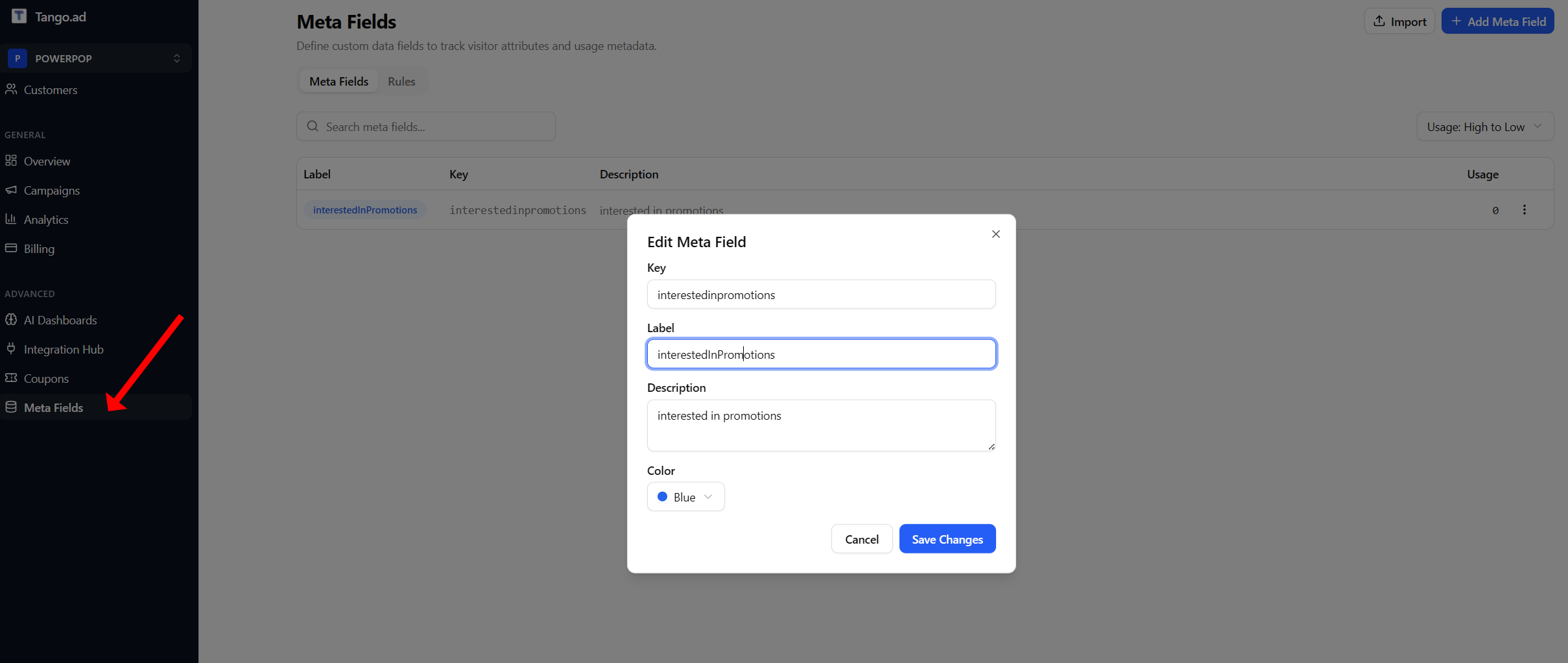
Creating the interestedInPromotions metafield used for visitor segmentation and behavioral targeting based on promotional content engagement.
This metafield becomes part of the visitor profile and can be used in future targeting rules.
Next, create the first campaign. Its purpose is to present the promotional product, encourage visitors to explore the offer and Identify visitors interested in promotions.
A simple banner is usually sufficient. To avoid repeatedly showing the same message, configure frequency limits according to your campaign strategy.
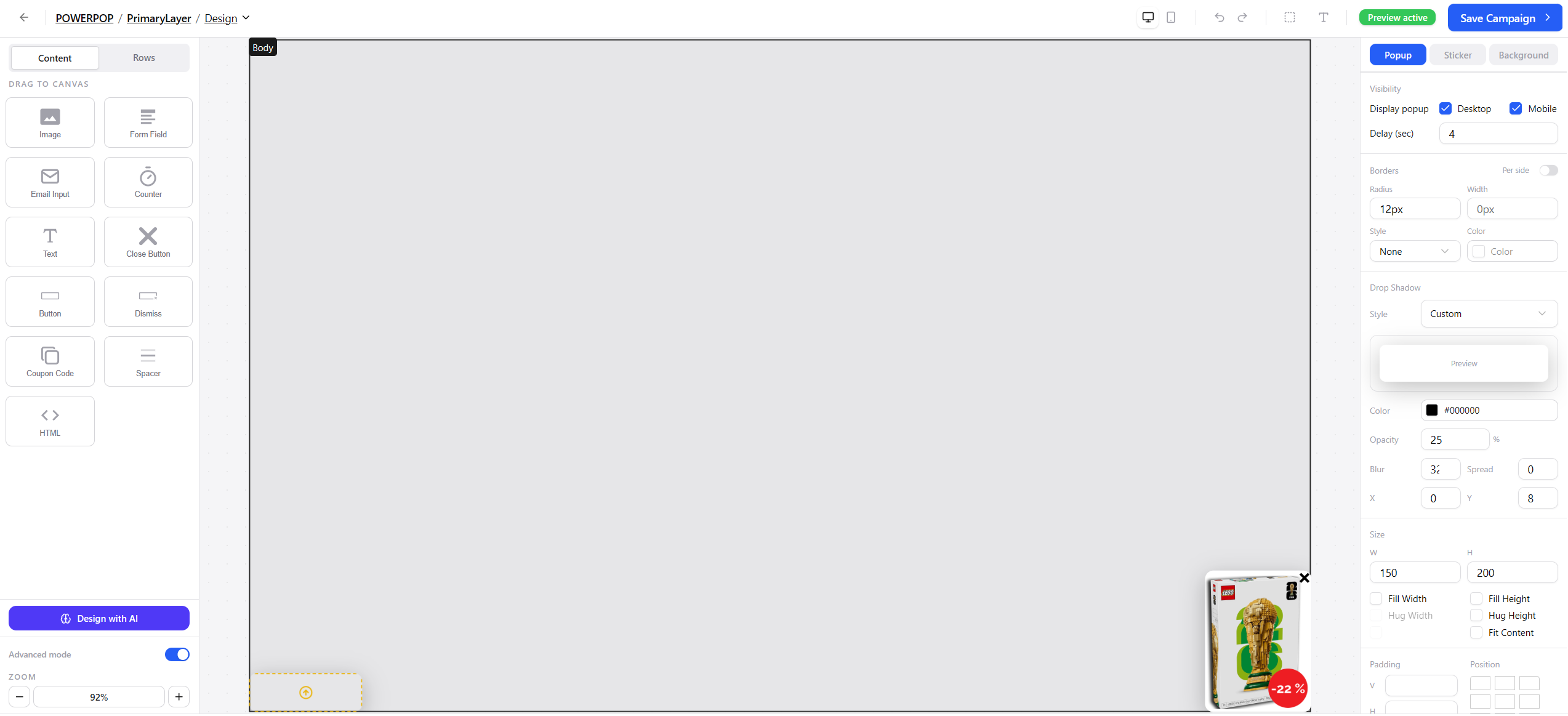
The primary weblayer identifies visitors interested in promotional products and starts the conversion optimization journey.
When the visitor clicks the banner:
Stop displaying the campaign to that visitor
Redirect the visitor to the product page
Assign the metafield:
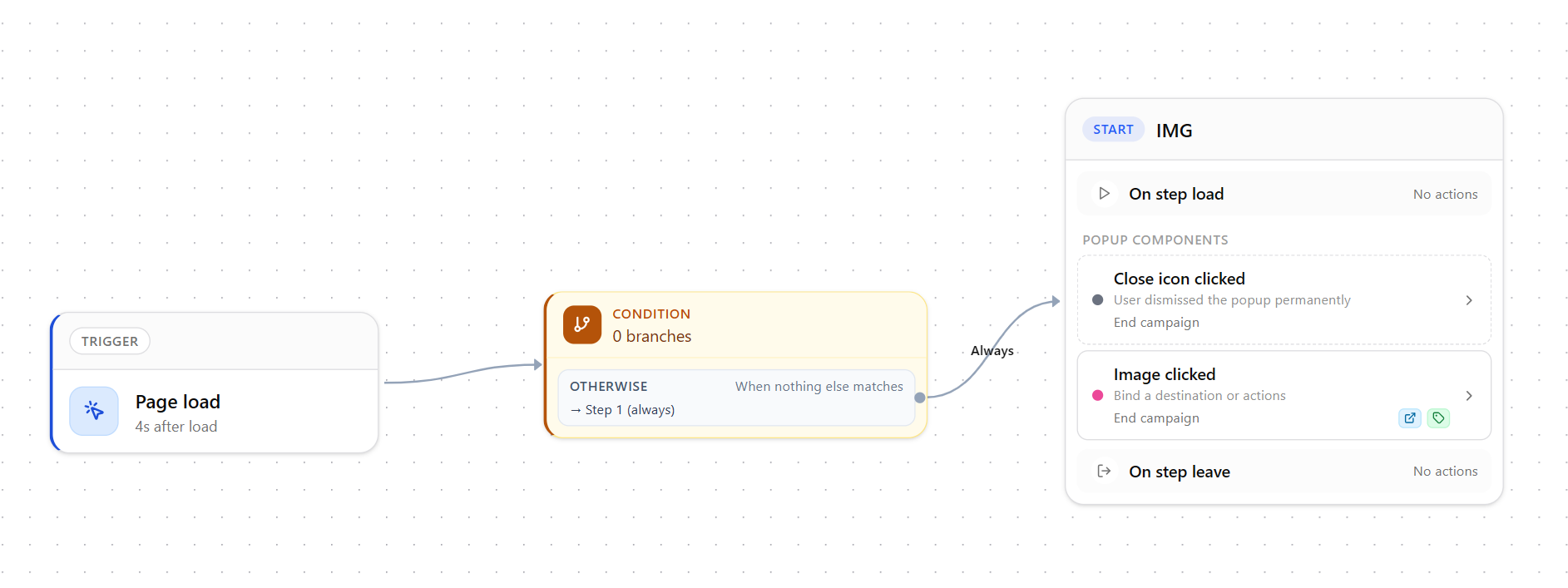
When visitors interact with the promotional banner, Tango.ad automatically assigns a behavioral tag and redirects them to the product page.
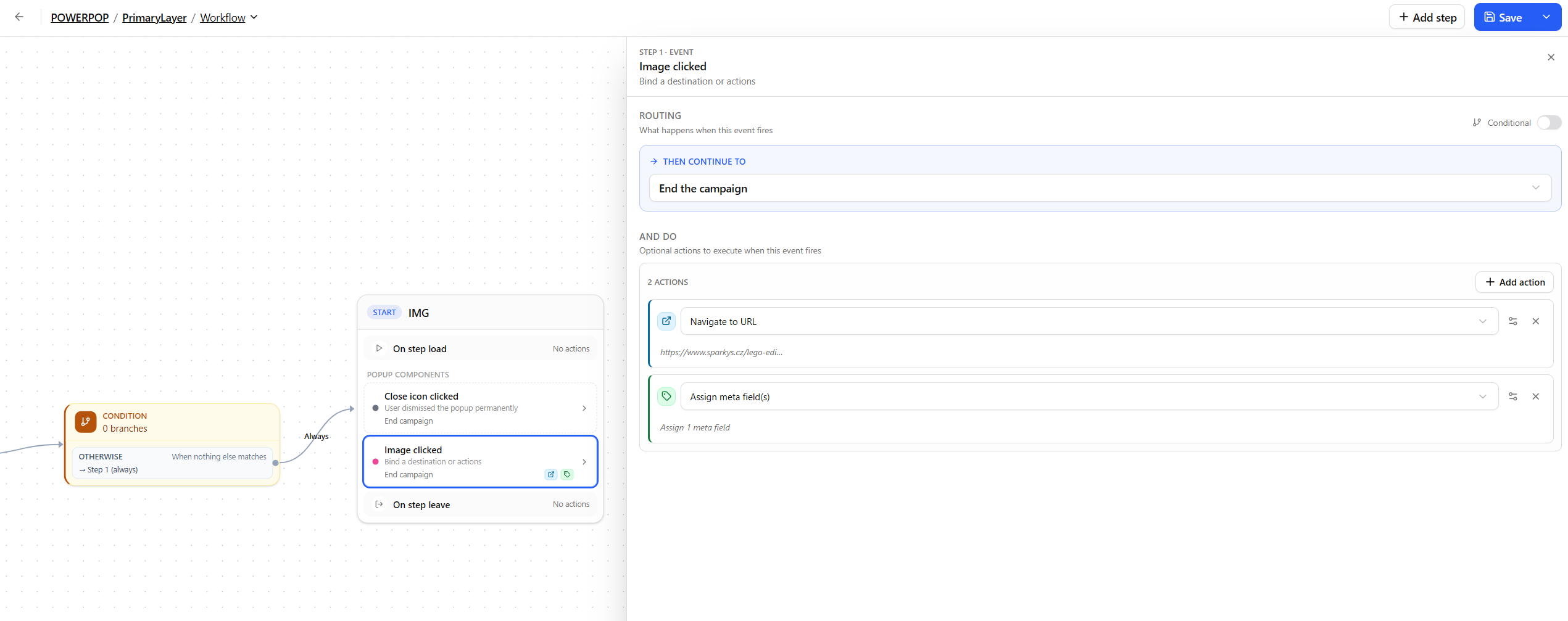
Behavioral data collected from visitor interactions becomes part of the visitor profile and can be used for future personalization campaigns.
At this point, the visitor has been identified and segmented.
The secondary layer focuses on lead conversion through a multi-step journey, providing a more granular look at visitor analytics at each touchpoint:
Are you interested in step - where we’re asking a visitor about his interests in other special deals (we validate user interest here)
Registration step - containing email registration service
Success step greetings visitor and showing him special seasonal products
| Interest validation | Registration | Thank You and Seasonal Offers |
|---|
Simply link next steps according described visitor journey
If in step1 visitor click on button, open second step of journey
If a visitor successfully sign-up, navigate him to last step - thank you for registering
And if a visitor is interested in you special promotions, open that section on your website and end whole scenario of visitor journey
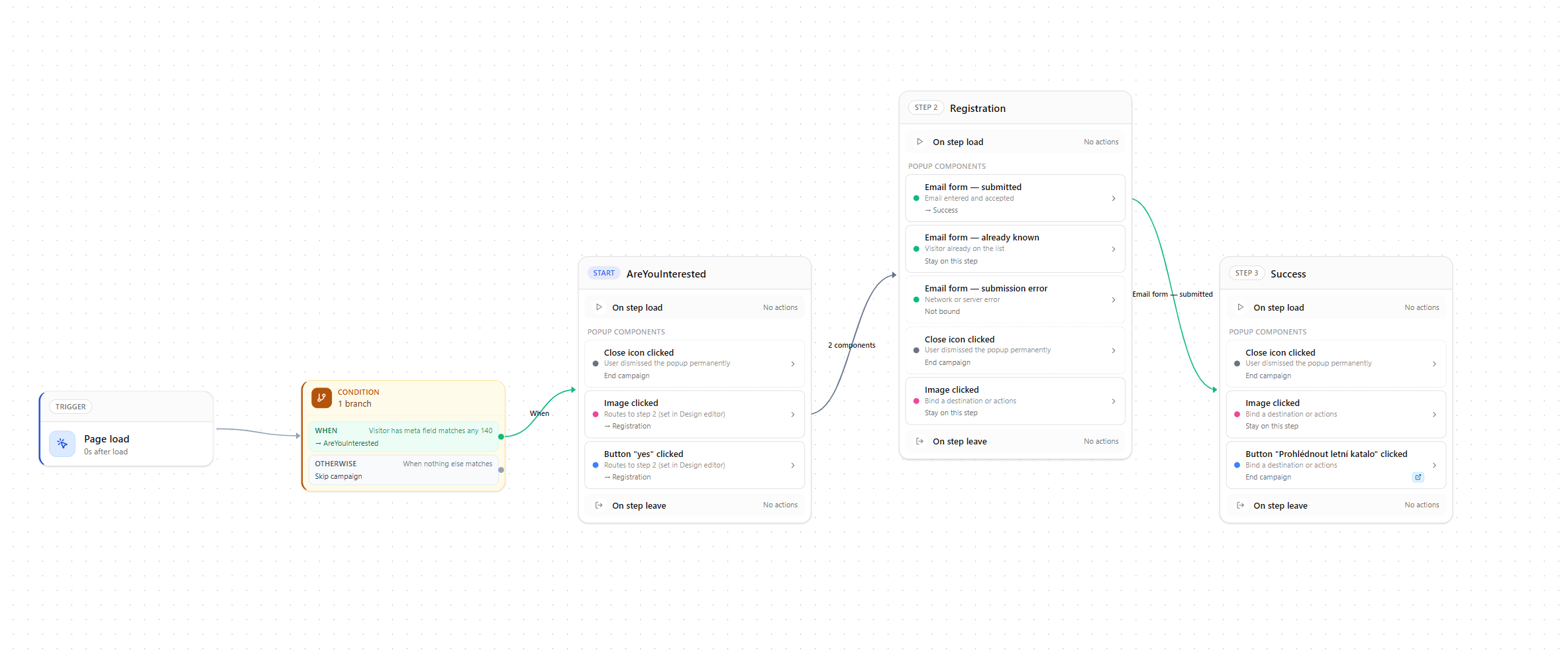
The workflow automatically guides qualified visitors through validation, registration, and personalized offer presentation.
The most important targeting condition is - Launch this campaign only when visitor metafield = interestedInPromotions. This guarantees that only qualified visitors enter the journey.
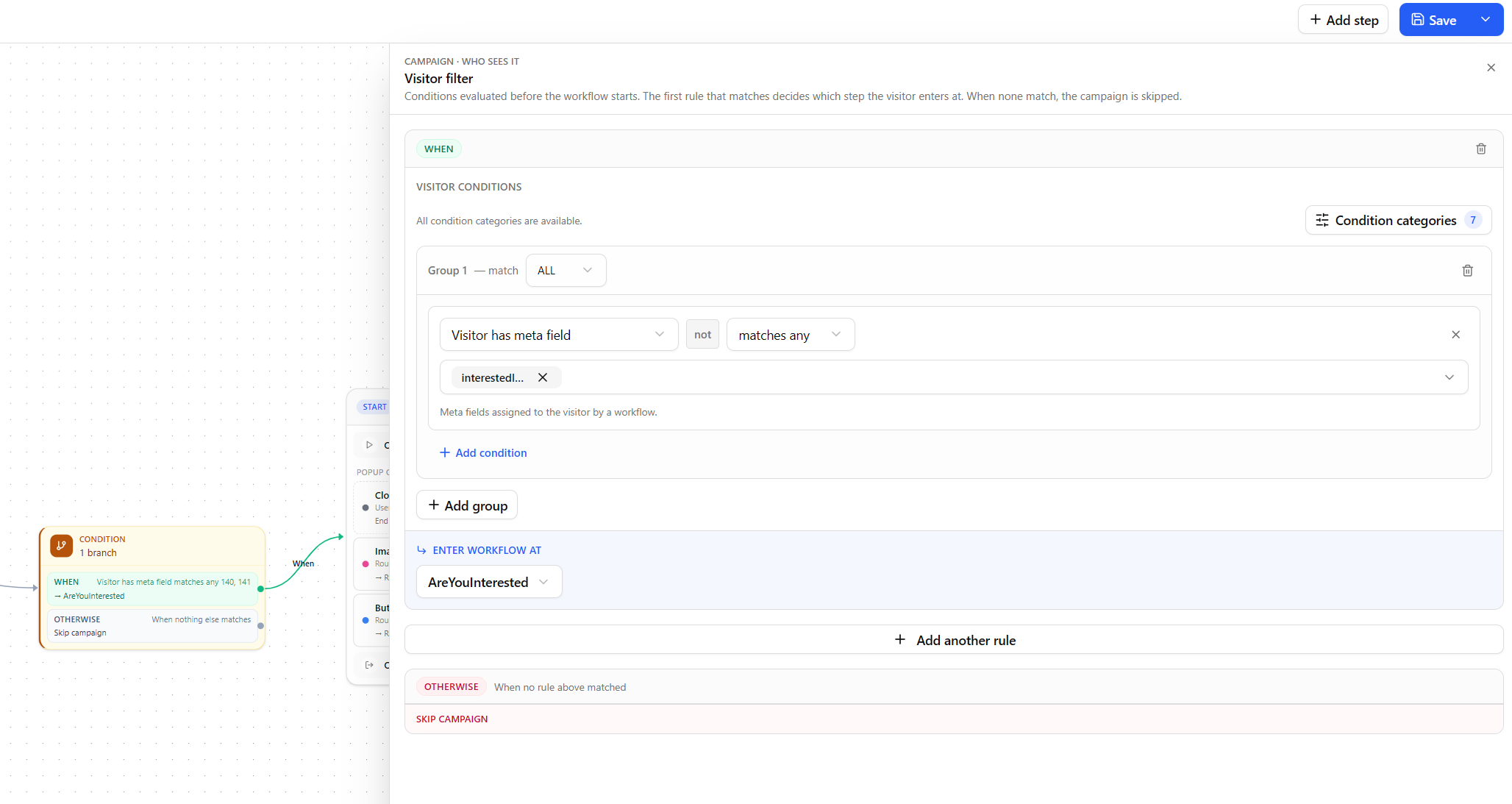
The campaign is displayed only to visitors previously identified as interested in promotions, ensuring highly relevant onsite personalization.
Most websites treat every visitor the same. Tango.ad allows you to identify meaningful visitor behavior and react with personalized conversion journeys that evolve as the visitor engages with your website.
In this example, a simple click on a promotional product becomes the starting point for a complete lead acquisition workflow. Visitors are automatically segmented, qualified, and converted into subscribers without relying on coupons or margin-reducing incentives.
The real value is not the popup itself. The real value is the ability to understand visitor intent, build persistent visitor profiles, and trigger highly relevant experiences based on actual behavior.
As your visitor data grows, the same approach can be expanded into advanced product recommendations, loyalty campaigns, abandoned-cart recovery, category-specific journeys, and AI-driven personalization strategies across the entire customer lifecycle.
Connect Ecomail to Tango.ad to streamline lead acquisition and start automated nurturing sequences.
Most websites personalize only on the current session. The most valuable data already sits in your customer and order database.
Your website already generates opportunities. Tango helps you turn more of them into customers.